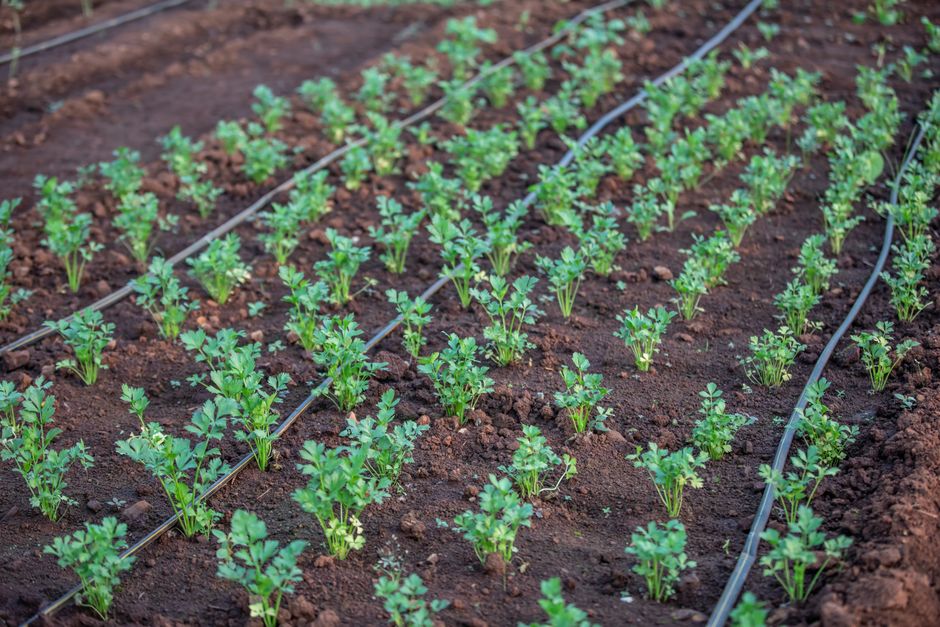
Drip Irrigation Systems for Water Efficiency
Drip irrigation, also known as trickle irrigation, is a method of watering crops by delivering water directly to the root zone of plants through a network of valves, pipes, tubing, and emitters. Unlike traditional overhead sprinklers that wet the entire field, drip irrigation applies water slowly and precisely, minimizing losses to evaporation, runoff, and deep percolation. This technique has gained attention in agricultural practices, particularly in regions where water resources are limited or where efficient water use is a priority. In Estonia, where agriculture faces unique climatic and soil conditions, the adoption of drip irrigation systems is being explored as a means to optimize water usage and support sustainable crop production.
The core principle of drip irrigation is to maintain a favorable moisture level in the root zone, directly supporting plant growth without wetting foliage or soil surface. By doing so, it reduces the risk of fungal diseases and weed growth, which are common issues with overhead irrigation. Furthermore, drip systems can be tailored to deliver precise amounts of water, fertilizers, and other amendments through fertigation, enhancing nutrient uptake and reducing waste. This article provides a comprehensive overview of the components involved, installation considerations, and the contextual factors that influence the performance of drip irrigation systems, particularly in the Estonian agricultural landscape.
As water efficiency becomes increasingly important in global agriculture, understanding the technical aspects of drip irrigation is essential for farmers, agronomists, and agricultural stakeholders. The information presented here focuses on the principles, components, and installation processes, emphasizing the methodological approach rather than promising specific outcomes. It highlights the need for careful planning, system design, and maintenance to realize the potential benefits, while acknowledging that results depend on various site-specific factors.
Understanding Drip Irrigation Components
A drip irrigation system comprises several key components that work together to deliver water uniformly and efficiently. The main components include a water source, a pumping unit, a filtration system, a fertilizer injection unit (if fertigation is desired), main and sub-main lines, lateral lines, emitters, and various fittings and accessories. Each component plays a critical role in the overall performance and reliability of the system.
The water source can be a well, pond, river, or municipal supply, and its quality and pressure determine the need for filtration and pressurization. A pumping unit is often required to provide the necessary pressure, which typically ranges from 1 to 2 bars for most drip systems. Filtration is crucial to prevent clogging of the small emitter orifices; thus, screen filters, disc filters, or sand separators are used depending on the water quality. The fertilizer injection unit, such as a venturi injector or a piston pump, allows for the precise application of fertilizers through the irrigation water, a practice known as fertigation.
Main lines, usually made of PVC or polyethylene, transport water from the source to the sub-main lines. Sub-main lines are typically of smaller diameter and distribute water to the lateral lines, which are laid along the crop rows. Emitters, also called drippers, are attached to the lateral lines and release water drop by drop. They come in various types, including inline emitters, on-line emitters, and adjustable emitters, each with specific flow rates and spacing. Additionally, pressure regulators, valves, and gauges are incorporated to maintain consistent operating pressures and control the system zones.
Choosing the appropriate components depends on factors such as soil type, crop water requirements, field layout, and water source characteristics. For instance, in sandy soils with high infiltration rates, closer emitter spacing and higher flow rates may be necessary to ensure adequate wetting, while in clay soils, lower flow rates may suffice. Proper component selection is a foundational step in designing an efficient drip irrigation system.
Designing an Efficient Drip Irrigation Layout
Designing a drip irrigation layout requires careful consideration of crop types, planting patterns, soil properties, and topographical conditions. The goal is to achieve uniform water distribution across the field while minimizing pressure losses and operational complexities. The design process typically begins with determining the crop water demand, which is influenced by evapotranspiration rates, growth stages, and climatic conditions. This information guides the selection of emitter flow rates and spacing.
The hydraulic design involves calculating friction losses along the pipes to ensure that all emitters operate within a desired pressure range. This is usually done using hydraulic equations or specialized software. The layout should be divided into zones based on similar plant water needs and soil characteristics, allowing for targeted irrigation schedules. For example, a field with varying soil types might be divided into multiple zones to apply different amounts of water.
Emitter spacing is determined by the soil’s lateral water movement. In coarse-textured soils, water moves downward more than sideways, necessitating closer emitter spacing or higher flow rates to create overlapping wetting zones. In fine-textured soils, lateral spread is greater, allowing wider spacing. The placement of laterals should align with crop rows, typically one lateral per row or one lateral serving two rows, depending on the planting configuration.
Topography also influences the design; on slopes, pressure-compensating emitters are recommended to counteract the effects of elevation differences and ensure uniform application. By carefully designing the layout, the system can operate efficiently, reducing water waste and promoting optimal plant growth conditions.
Installation and Setup Steps
The installation of a drip irrigation system involves a series of steps, from site preparation to system testing. A methodical approach helps ensure that all components are correctly assembled and functioning. The initial step is site preparation, which includes clearing the field of debris, leveling the ground as much as possible, and marking the locations of main lines, sub-mains, and laterals. An inventory of all components and tools is then prepared to avoid interruptions during assembly.
The main line is typically laid first, either buried underground or laid on the surface, depending on the system design and farming practices. Underground installation protects the pipes from damage and reduces evaporation, but requires trenching. Surface installation is less labor-intensive and easier to maintain, but exposes the pipes to potential damage from machinery and sunlight. After installing the main line, the sub-mains are connected, and then the lateral lines are laid along the crop rows.
Emitters are either pre-installed in the lateral lines or inserted during installation. It is essential to handle the tubing carefully to avoid kinks or punctures. Once all lines are laid, the connections are tightened, and the system is flushed to clear any debris or dirt. After flushing, the end caps are installed, and the system is pressurized for a leak test. Any leaks are promptly repaired.
The final step involves calibrating the system by measuring flow rates and pressures at various points to ensure they match the design specifications. This may include adjusting pressure regulators or replacing emitters if needed. Proper installation is vital to the system’s performance; even minor mistakes can lead to uneven water distribution or premature failures.
Operational Considerations and Maintenance
Once operational, a drip irrigation system requires ongoing attention to maintain efficiency. Regular inspection and maintenance tasks include checking for emitter clogging, cleaning filters, repairing leaks, and flushing the lines periodically. The frequency of these tasks depends on water quality, system usage, and environmental factors. For instance, if the water source contains high sediment or organic matter, filters may need more frequent cleaning or replacement.
Monitoring soil moisture levels is recommended to determine irrigation schedules. This can be done using soil moisture sensors or manual methods such as probing the soil. Sensor-based irrigation controllers can automate the process, applying water only when needed, which aligns with the principles of water efficiency. However, the use of such technologies should be based on site-specific assessments and professional advice.
Seasonal maintenance includes draining the system before winter in cold climates like Estonia to prevent damage from freezing. This involves opening drain valves and ensuring that all water is evacuated from the lines. Proper preparation for winter extends the system’s lifespan and ensures readiness for the next growing season.
It is also important to regularly review system performance, including water usage data and crop health observations. Any deviations from expected performance may indicate issues that need addressing. By adhering to a consistent maintenance routine, the system can continue to function effectively over multiple seasons.
Context of Drip Irrigation in Estonia
In Estonia, the adoption of drip irrigation is relatively recent compared to traditional irrigation methods. The country’s climate, characterized by moderate temperatures and variable precipitation, influences water availability and crop water needs. While rainfall may be sufficient in some years, dry periods can occur during the growing season, making supplemental irrigation necessary for certain crops. Drip irrigation offers a way to use water efficiently during these dry spells.
Soil conditions in Estonia vary, with many areas having sandy or peat soils. Sandy soils have low water holding capacity, requiring more frequent irrigation, while peat soils can have drainage challenges. Drip irrigation can be adapted to these conditions by adjusting emitter flow rates and scheduling. For example, in sandy soils, shorter irrigation intervals with lower volumes may be beneficial, while in peat soils, careful management of drainage is essential.
Local expertise and support for drip irrigation are growing, with agricultural advisory services and equipment suppliers providing guidance. However, the decision to adopt drip irrigation should be based on a thorough analysis of the farm’s specific circumstances, including crop types, water sources, and economic viability. Factors such as initial investment costs and maintenance requirements need to be weighed against potential benefits in water savings and crop yield stability.
In summary, drip irrigation systems present a set of components and methodologies that can contribute to water-efficient agriculture. Their effectiveness depends on careful design, proper installation, and diligent maintenance, as well as alignment with local conditions. For farmers in Estonia, exploring drip irrigation requires a proactive approach to learn and adapt this technology to their unique context, with the understanding that outcomes are influenced by many variables.